

Keyword Research & Strategy Services
Attract the Right Search Traffic and Turn It Into Results
Keywords shape how your audience finds you. Without a clear keyword strategy, content attracts traffic but fails to convert. Keyword Research and Strategy ensures your website targets the right search terms based on intent, competition, and business goals.
By aligning keywords with user needs and search behavior, this service helps you drive qualified traffic, improve rankings, and build a scalable SEO foundation.
Services We Offer
Search Intent–Driven Keyword Research
We identify keywords based on user intent rather than search volume alone. This includes informational, commercial, navigational, and transactional queries that reflect how users actually search.
Our research focuses on relevance, competitiveness, and conversion potential. The result is a keyword set aligned with real user needs and business objectives.
Long-Tail and Opportunity Keyword Identification
Our team uncovers long-tail and low-competition keywords that are easier to rank and more likely to convert. These keywords often capture high-intent searches that larger competitors overlook.
By targeting these opportunities, your site can gain faster visibility and consistent organic growth. This creates momentum without relying solely on highly competitive terms.
Competitor Keyword and Gap Analysis
Competitive analysis is used to identify keywords your competitors rank for and areas where they are vulnerable. This includes content gaps, ranking overlaps, and untapped keyword clusters.
By mapping opportunities against competitor performance, this approach prioritizes keywords with the highest potential impact. Your strategy becomes proactive rather than reactive.
Keyword Mapping and Content Alignment
Keywords are mapped to specific pages and content types to avoid cannibalization and improve topical relevance. This ensures each page has a clear purpose and ranking goal.
Content alignment strengthens internal linking, improves crawlability, and increases ranking stability. Search engines and users both benefit from better structure and clarity.
Keyword Strategy and Roadmap Creation
A structured keyword roadmap is created to guide content creation and optimization over time. This includes priority keywords, supporting topics, and publishing recommendations.
The roadmap turns keyword data into an actionable SEO plan. You gain a clear direction instead of scattered optimization efforts.
What Is Keyword Research and Strategy?
Keyword research and strategy is the process of identifying, analyzing, and organizing search terms that users type into search engines and AI-driven platforms when looking for information, products, or services. It goes beyond finding keywords.
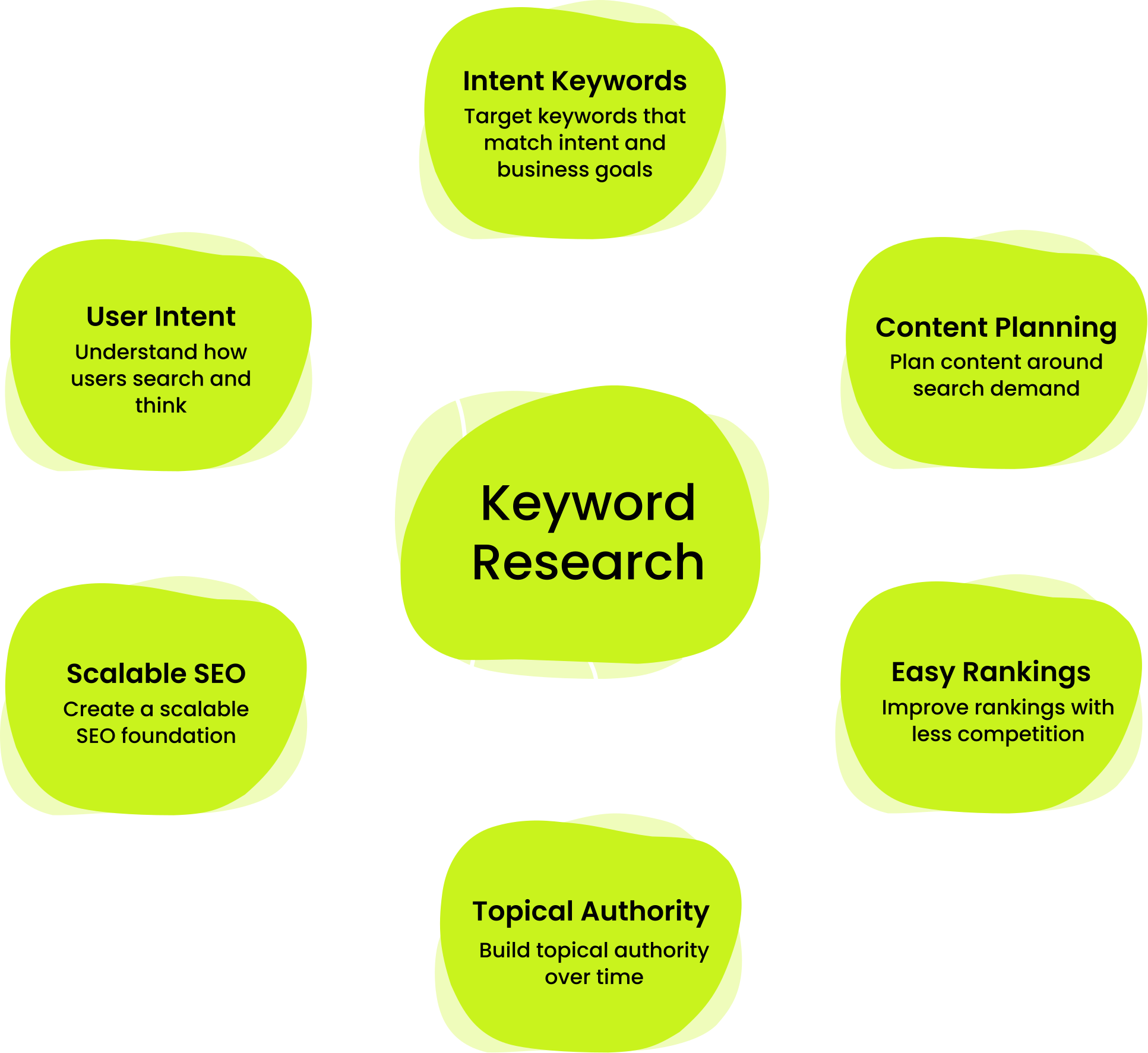
It helps you:
- Understand how users search and think
- Target keywords that match intent and business goals
- Plan content around search demand
- Improve rankings with less competition
- Build topical authority over time
- Create a scalable SEO foundation
A strong keyword strategy connects search behavior with meaningful growth.
Business Impact of Strong Keyword Strategy
When keyword research is done correctly, SEO becomes predictable and measurable. A well-built keyword strategy helps you:
- Attract qualified traffic instead of random visits
- Improve conversion rates by matching intent
- Reduce wasted effort on low-impact keywords
- Build authority across related topics
- Scale content creation with clear priorities
- Adapt quickly to search and AI changes
Keyword strategy is the backbone of long-term organic growth.
Types of Keyword Strategies We Deliver
Each strategy focuses on attracting the right audience and driving consistent organic growth.
Intent-Based Keyword Strategy
Focuses on matching content with user intent. Includes: informational, commercial, and transactional keywords.

Long-Tail Keyword Strategy
Targets specific, lower-competition searches. Includes: question-based queries and niche phrases.

Competitive Keyword Strategy
Identifies ranking gaps and opportunities. Includes: competitor analysis and overlap mapping.

Topical Authority Strategy
Builds content clusters around core topics. Includes: pillar pages and supporting content.

AI and Voice Search Keyword Strategy
Prepares content for conversational and AI-driven search. Includes: natural language queries and semantic variations.

How Our Solutions Work
Reviewing existing rankings, content, and search opportunities.
Identifying how users search and what they want to achieve.
Prioritizing keywords based on impact and feasibility.
Assigning keywords to pages and content types.
Creating a clear plan for content and optimization.
Tracking performance and adjusting strategy.
Tools & Technologies
Google Keyword Planner
Ahrefs
Semrush
Moz Keyword Explorer
Ubersuggest
AnswerThePublic
Google Search
Console
SpyFu
KeywordTool.io
Google Trends
FAQs
What is keyword research and strategy?
Keyword research and strategy is the process of identifying search terms users use and organizing them into a structured plan that aligns with search intent and business goals to drive organic traffic.
Why is keyword research important for SEO?
Keyword research is important because it helps target the right audience, improve search visibility, and attract users who are more likely to convert rather than random traffic.
How do you choose the right keywords?
The right keywords are chosen based on search intent, relevance, competition, and conversion potential. Volume alone is not enough to determine keyword value.
What is the difference between short-tail and long-tail keywords?
Short-tail keywords are broad and competitive, while long-tail keywords are more specific and often have higher conversion intent with lower competition.
How often should keyword strategy be updated?
Keyword strategy should be reviewed regularly, especially when search trends, competition, or business goals change. Most strategies benefit from updates every few months.
Portfolio
See real-world data pipelines built for automation, reliability, and scale.
Take the Next Step Toward Smarter Visibility
Your business deserves strategic, high-intent keywords and a clear roadmap built for stronger rankings and long-term search growth.