The 2026 Data Revolution: From Passive Dashboards to Autonomous Agents
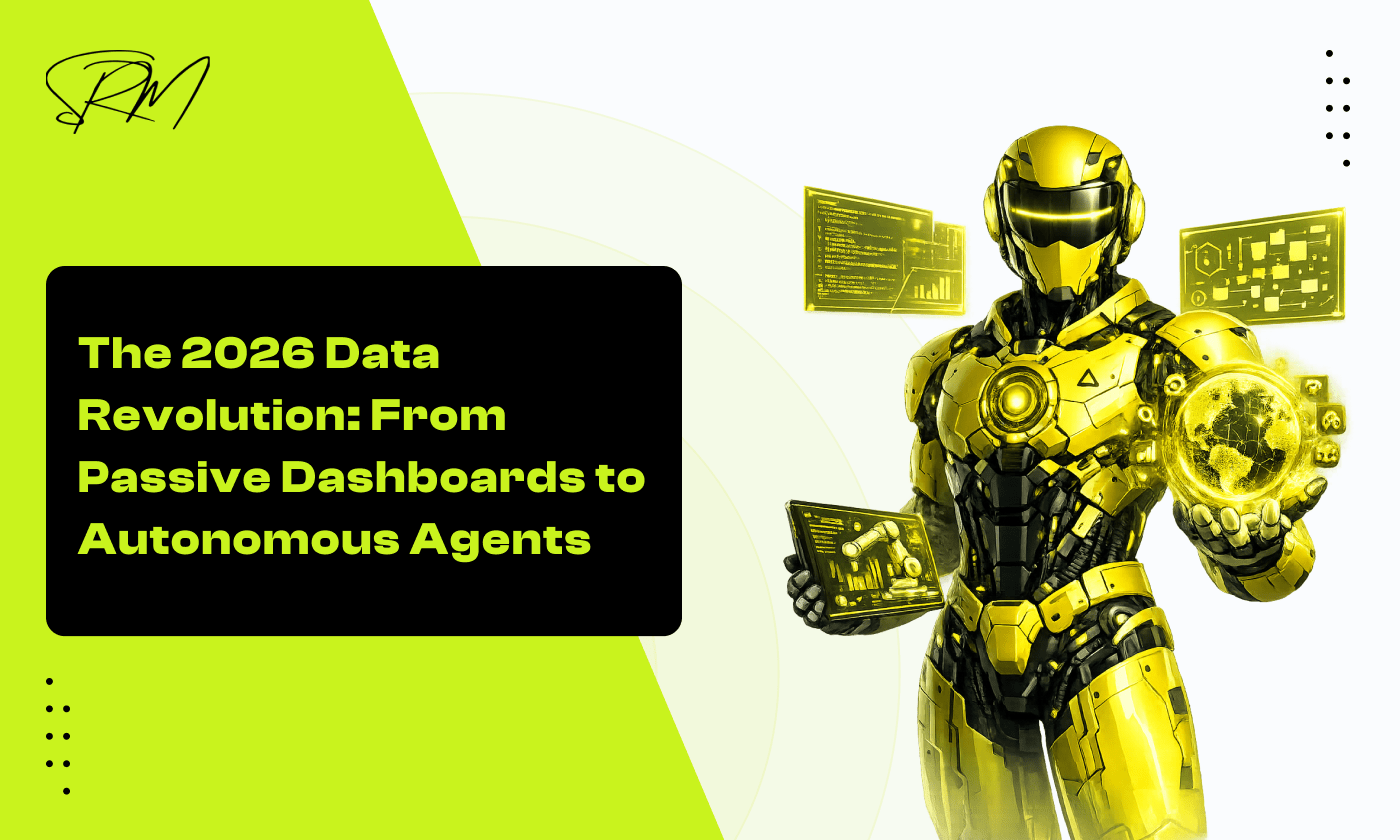
The world of data science just shifted gears. For years, we focused on building better dashboards so humans could make better decisions. But in early 2026, the goal has changed. We are no longer just visualizing the past; we are building Autonomous Agents that can reason, plan, and act on data in real time.
This month alone has seen a tidal wave of releases that redefine the “modern data stack.” From Python 3.14 finally breaking free of its performance limits to Pandas 3.0 revolutionizing memory management, the tools we use every day have become significantly more powerful. Meanwhile, giants like Snowflake and MinIO have launched “Agentic” platforms that allow AI to understand your entire business context, not just the numbers on a spreadsheet.
Table of Contents
The End of the Dashboard Era?
In 2026, the data industry is reaching a consensus: the era of the passive dashboard is ending. For over a decade, the Single Pane of Glass was the gold standard. We built beautiful, complex screens filled with KPIs, expecting business leaders to log in, find insights, and then manually act on them. But as we move further into this year, that model is breaking under the weight of real-time demands.
Why traditional BI is failing to keep up with real-time business
The traditional Business Intelligence (BI) model was designed for a world that moved slower. In 2026, several factors have made static dashboards obsolete:
- The Insight-to-Action Gap: A dashboard shows you that sales are down, but it does not fix the problem. You still have to leave the dashboard, open a different tool (like a CRM or ERP), and execute a task. In a high-speed market, this delay is a competitive liability.
- The Problem of Dashboard Sprawl: Most enterprises now have hundreds (sometimes thousands) of reports. Research shows that up to 70% of enterprise dashboards go unused after the first week because they are too generic to help with specific daily tasks.
- Latency is Lethal: Traditional BI often relies on nightly batches. By the time the data hits your screen on Tuesday morning, the business opportunity that appeared on Monday afternoon is already gone.
The shift from visualizing the past to operationalizing the present
The most significant trend of 2026 is the move from Descriptive Analytics (what happened?) to Operational Analytics (what is happening right now, and what should the system do about it?).
From Hindsight to Foresight
In the old model, we used data to generate reports. In the new model, we use data to trigger actions.
| Feature | Traditional BI (The Past) | Operational Analytics (2026) |
| Primary Goal | Visualizing trends for monthly meetings | Driving immediate, daily business actions |
| User Base | Executives and Analysts | Front-line staff and AI Agents |
| Data Frequency | Batch updates (Daily/Weekly) | Continuous Streaming (Real-time) |
| Output | A chart or a PDF | An automated alert or a triggered API call |
Operationalizing the Present
Instead of a manager looking at a churn dashboard, 2026 systems use Agentic Workflows. If a high-value customer shows signs of leaving, the system does not wait for a human to notice a red bar on a chart. It autonomously:
- Identifies the risk via real-time streaming data.
- Calculates the best discount to offer using a localized ML model.
- Executes an automated personalized email or alerts a human representative immediately.
The dashboard is not disappearing entirely, but its role is changing. It is moving from being the main event to being a safety check. We are entering an age where the most valuable data science work happens in the background, invisible to the user, powering the autonomous decisions that keep a business running.
Python 3.14 & Pandas 3.0: The Powerhouse Duo
In 2026, the engine under the hood of data science has been completely rebuilt. The duo of Python 3.14 and Pandas 3.0 represents the most significant performance leap in a decade, specifically targeting speed and memory efficiency.
This architectural shift is a response to the massive data volumes we face in 2026, where efficiency is no longer a luxury but a necessity for survival. By moving away from older, fragmented memory management, these updates allow developers to treat their local machines like high-performance clusters. The deep integration between the language core and its most essential library means that operations which once required complex cloud scaling can now be executed instantly on a standard laptop. This synergy is effectively ending the era where Python was criticized for being slow, replacing that reputation with a new standard for high-velocity data engineering.
Python 3.14: Multi-core processing without the GIL
For thirty years, Python developers struggled with the Global Interpreter Lock (GIL), a mechanism that prevented multiple threads from executing Python code at the same time. This meant that even if your computer had 16 cores, Python could only truly use one for most tasks. With Python 3.14, that barrier is officially gone. This performance jump is particularly useful if you are looking to scale your workflows; for instance, you can learn How to Automate Your Monthly Reports with Python and BigQuery to see how these efficiencies apply to real-world data pipelines.
Free-Threaded Builds: You can now run a version of Python that is GIL-free. This allows your custom data processing scripts to use every single core on your CPU simultaneously, leading to performance gains of up to 10x for CPU-heavy tasks.
True Parallelism: In older versions, we had to use complex multiprocessing libraries to get around the GIL, which consumed massive amounts of RAM. Now, you can achieve true parallelism within a single process, keeping your code simple and your memory footprint small.
Experimental JIT Compiler: Python 3.14 includes an improved Just-In-Time (JIT) compiler. It identifies your most frequent operations and compiles them into machine code while the program runs, making your loops and mathematical logic faster than ever.
Pandas 3.0: A game changer for memory
Released on January 21, 2026, Pandas 3.0 is an architectural overhaul that finally addresses the library’s historic memory hunger. The two biggest features are Apache Arrow and Copy-on-Write.
The Power of Apache Arrow
Historically, Pandas used NumPy as its primary engine, which struggled with text and missing values. Pandas 3.0 now uses Apache Arrow by default for its backend.
Dedicated String Type: Text columns are no longer generic objects. They are now a dedicated str type that processes 5 to 10 times faster and uses up to 50% less memory.
Interoperability: Because Arrow is a cross-language standard, you can share data between Python, Polars, and DuckDB with zero-copy overhead.
Copy-on-Write (CoW)
If you have ever seen the confusing SettingWithCopyWarning, you will be happy to know it is gone.
Predictable Behavior: In Pandas 3.0, any time you filter or select data, the system behaves as if it created a copy. You no longer have to worry if changing a subset of your data will accidentally modify the original DataFrame.
Memory Efficiency: Despite behaving like a copy, Pandas 3.0 is actually smarter. It only creates a physical copy of the data at the exact moment you try to change a value. If you only read the data, it stays as a view, saving gigabytes of RAM in large pipelines.
| Feature | Pandas 2.x | Pandas 3.0 (2026) |
| String Handling | Slow object dtype | Fast Arrow-backed str |
| Memory Policy | Aggressive copying | Efficient Copy-on-Write |
| Concurrency | Limited by GIL | Multi-core ready |
| Missing Data | Mixed (NaN/None) | Standardized Nullables |
The Major February 2026 Launches You Missed
In early February 2026, the data science landscape witnessed a massive shift from experimentation to operational reality. While many teams were still focusing on basic automation, the leaders in the industry launched tools that allow AI to think and act within the specific context of a business. These updates are not just incremental improvements; they represent a fundamental change in how we store, process, and interact with data at an enterprise scale.
The most exciting part of these February launches is the focus on agentic intelligence. We are seeing a move away from generic AI helpers toward specialized systems that understand governance, security, and complex data relationships. By bridging the gap between structured databases and unstructured files like PDFs or images, these new tools ensure that every piece of information in an organization is ready to be used by an AI agent to solve real-world problems.
Snowflake Cortex Code: The first data-native AI agent
Launched on February 3, 2026, Snowflake Cortex Code is not just another coding assistant. While tools in the past could help you write a snippet of SQL, Cortex Code is an autonomous agent that deeply understands your specific enterprise data context.
- End-to-end Automation: It can handle the entire lifecycle of a project, from building data pipelines and performing advanced analytics to deploying machine learning models.
- Context Awareness: Unlike generic AI, it knows your specific tables, schemas, and security permissions. It understands which data is sensitive and which transformations are the most cost-effective.
- Meet You Where You Work: It is available both directly inside the Snowflake platform (Snowsight) and as a Command Line Interface (CLI) that integrates with popular editors like VS Code and Cursor.
MinIO AIStor Tables: Querying images and PDFs like SQL
Also hitting general availability in early February 2026, MinIO AIStor Tables has solved one of the oldest problems in data science: the wall between structured and unstructured data.
- The Unified Data Store: Historically, if you wanted to analyze images or PDFs, you had to manage them in a separate system from your SQL databases. AIStor Tables unifies them into a single high-performance store based on the Apache Iceberg V3 standard.
- Queryable Unstructured Data: You can now use standard SQL to query folders of images or documents. For example, an AI agent can query a table to find all product images from a specific date and immediately process them without needing to navigate complex file paths.
- Built for Agentic AI: This launch is specifically designed to feed AI agents. By treating every piece of enterprise knowledge (whether a spreadsheet, a PDF, or an audio file) as a queryable object, MinIO has created a foundation where AI can learn and reason across the entire business.
| Launch | Primary Impact | Best Use Case |
| Snowflake Cortex Code | Automates development tasks with data awareness | Rapidly building production-ready data pipelines |
| MinIO AIStor Tables | Bridges the gap between files and SQL tables | Building AI agents that need to search through documents |
Meet Your New Coworker: The AI Agent
In early 2026, we have moved beyond simple assistants that help us write emails. We are now entering the era of the digital teammate. These are not just tools we use; they are agents that work alongside us, capable of managing entire projects from start to finish.
How Agentic AI moves beyond chatbots to autonomous decision engines
For the last few years, we interacted with AI via chatbots. You asked a question, and the AI gave an answer. It was a reactive relationship. In 2026, the shift is toward proactive autonomy.
- Goal Oriented vs. Prompt Oriented: A chatbot waits for your command. An AI agent only needs a goal. For example, instead of asking an AI to write a SQL query for sales data, you tell the agent to find out why shipping delays increased in February. The agent then plans its own steps, queries the database, analyzes the results, and presents a solution.
- Reasoning and Planning: Modern agents use large language models as reasoning engines. They can break a complex request into smaller sub-tasks, execute them in order, and even self-correct if they encounter an error along the way.
- Tool Use: Unlike a chatbot that is trapped in a text box, an AI agent can use tools. It can log into your CRM, browse a secure web portal, or trigger a Python script in your cloud environment to get the job done.
Multi-agent orchestration: When agents talk to agents
The biggest breakthrough this year is that we are no longer relying on one single AI to do everything. Instead, we are using Multi-Agent Orchestration. This is like moving from a single freelancer to a full professional department.
In this system, different agents with specialized roles communicate with each other to complete a workflow:
- The Supervisor Agent: This agent acts as the manager. It receives your request, creates a plan, and assigns tasks to other specialized agents.
- The Specialist Agents: These are domain experts. You might have a Data Cleaning Agent that only fixes missing values, an Analyst Agent that looks for statistical trends, and a Visualization Agent that builds the final charts.
- The Policy Agent: This agent acts as a safety check. It monitors the other agents to ensure they follow company security rules and do not access sensitive data they are not allowed to see.
The benefit of this teamwork
By letting agents talk to each other, businesses are seeing a massive reduction in errors. If the Analyst Agent makes a mistake, the Policy Agent or the Supervisor Agent can catch it and ask for a revision before a human ever sees the final report. This teamwork is what allows 2026 enterprises to scale their data science efforts without needing to hire a thousand human analysts for every task.
Data Visualization 3.0: Beyond the Chart
The way we look at data has fundamentally changed. We are moving away from flat, static images and toward interactive experiences that feel more like a conversation or a physical space.
This evolution is driven by the fact that visuals are processed up to 60,000 times faster than text, but traditional charts often fail to communicate the story behind the numbers. Modern visualization platforms now use generative AI to automatically suggest the best ways to present information based on the specific context of your business. These tools do not just show a graph; they provide a narrative that highlights the most important patterns and risks, ensuring that even non-technical team members can grasp complex insights in seconds.
Conversational Analytics: Asking Why did churn spike?
The biggest frustration with traditional dashboards was that they showed you a problem but never the cause. If a red line went down, you had to spend hours digging through filters to find out why. In 2026, we use Conversational Analytics to get immediate answers.
- Natural Language Queries: Instead of building a new report, you simply type a question into your platform like you are talking to a colleague. You can ask: why did customer churn spike in the northeast region last week?
- Reasoned Explanations: The system does not just show a new chart. It analyzes the underlying data and provides a written summary. It might explain that the spike was caused by a specific software bug in the latest app update or a delayed shipping route.
- Contextual Follow-ups: You can keep the conversation going. After seeing the reason, you can ask: how many high-value customers were affected? The system remembers your previous question and narrows the data down instantly.
Spatial AI: Bringing data into 3D and immersive environments
Data is no longer trapped on a two-dimensional screen. Spatial AI is a major 2026 trend that gives data a sense of location and depth, making it easier to understand complex physical systems. For industries like logistics, manufacturing, and urban planning, we now use 3D digital twins to transform how we perceive operations. Instead of looking at a traditional spreadsheet of warehouse inventory, a manager can wear an AR headset and see a virtual 3D map of the facility where high-demand items are highlighted in real-time. This level of immersion ensures that physical location and digital insights are perfectly aligned.
These location-aware insights are powered by sensors and cameras that connect digital data directly to the physical world. In a retail store, for example, heat maps are now projected onto 3D models of the floor plan to show exactly where shoppers are stopping and where they are getting frustrated. This technology allows decision-makers to literally walk through their data points. By using VR or holographic displays, teams can collaborate in a shared virtual space to move data clusters around or zoom into specific anomalies as if they were physical objects. By treating data as a physical landscape, businesses can discover patterns that would remain hidden on a flat monitor.
The 2026 Career Shift: Becoming an AI Orchestrator
The traditional image of a data scientist, someone spending 80% of their time cleaning messy spreadsheets and writing repetitive SQL queries, is fading fast. In 2026, we have entered the era of the AI Orchestrator. As autonomous agents take over the manual labor of data science, the human role has shifted from being a mechanic to being a conductor.
This evolution is creating a world where technical barriers are no longer the primary hurdle to innovation. Success belongs to those who can master the art of delegation, effectively managing specialized AI agents that handle the heavy lifting of coding and data processing. By stepping into this leadership role, you are not just executing tasks; you are designing complex, intelligent systems that solve high-level business problems with unprecedented speed.
Why your value is moving from writing syntax to managing AI workflows
For decades, the primary barrier to entry in data science was syntax. You had to master the specific library calls for Pandas, the complex parameters of Scikit-learn, or the rigid structure of SQL. Today, those technical hurdles have been lowered by agentic systems that can write perfect code from a natural language prompt.
From Coder to Architect: In 2026, your most valuable skill is no longer knowing how to write a loop or a join; it is knowing how to architect a workflow. You are now responsible for defining the problem, selecting the right agents for the task, and designing the logic that connects them.
The Rise of Intent Definition: We are moving toward a concept called Vibe Coding or Intent-Driven Development. This means you describe the desired business outcome to an AI system, which then generates the underlying infrastructure. Your expertise is required to judge if that infrastructure is logically sound, ethical, and aligned with business goals.
Focus on Problem Framing: As implementation becomes automated, the bottleneck shifts to problem-framing. An AI agent can calculate any statistic you want, but it cannot tell you which statistic actually matters for your company’s strategy. The data scientist of 2026 must be a deep thinker who understands the business context as well as they understand the math.
The new skill set: The Orchestrator’s Toolkit
To thrive in this new landscape, the skills you need have changed. Mastery of a single language is no longer enough; you must master the orchestration of entire AI ecosystems.
| Skill | 2025 Focus (The Past) | 2026 Focus (The Future) |
| Data Handling | Manual cleaning and ETL scripts | Managing Data Quality Agents |
| Programming | Writing and debugging syntax | Agent coordination and prompt engineering |
| Modeling | Hyperparameter tuning | Setting guardrails and ethical constraints |
| Communication | Explaining charts to managers | Directing agents and interpreting AI reasoning |
FAQs
What is an Autonomous Data Agent in 2026?
An Autonomous Data Agent is an AI system that analyzes real time data, makes decisions, and triggers actions without human intervention. Unlike dashboards that only display insights, these agents can identify risks, calculate solutions, and execute workflows automatically across business systems.
Why are traditional dashboards becoming less effective?
Traditional dashboards rely on batch data and manual decision making. In fast moving businesses, delays between insight and action create lost opportunities. Modern operational analytics reduces this gap by enabling systems to respond instantly instead of waiting for human review.
How does Python 3.14 improve data processing performance?
Python 3.14 removes the Global Interpreter Lock in free threaded builds, allowing true multi core execution. This enables parallel processing within a single process, significantly improving performance for CPU heavy analytics and large scale data workflows.
What makes Pandas 3.0 different from previous versions?
Pandas 3.0 introduces Apache Arrow as a backend and implements Copy on Write memory management. These changes improve speed, reduce memory usage, and eliminate unpredictable behavior when modifying filtered datasets.
What skills are required to become an AI Orchestrator?
An AI Orchestrator focuses on workflow design, agent coordination, intent definition, and ethical oversight. Instead of writing repetitive code, professionals define goals, supervise autonomous systems, and ensure data driven decisions align with business strategy and compliance standards.
Conclusion: Preparing for an Autonomous Future
The 2026 Data Revolution is not about the loss of human jobs; it is about the elevation of human work. By moving away from the tedious parts of data science, the nightly batch cleaning, the repetitive dashboard updates, and the manual model tuning, we are finally free to focus on what humans do best: strategy, ethics, and creative problem-solving.
Whether it is leveraging the multi-core speed of Python 3.14, using Snowflake Cortex Code to build pipelines in seconds, or walking through your data in a Spatial AI environment, the tools of 2026 are designed to amplify your intelligence. The future of data science is autonomous, and it is time for us to step into our new roles as the architects of this intelligent world.
Ultimately, staying relevant in this fast-moving landscape requires a commitment to lifelong learning and a shift in mindset. As AI agents handle the execution, your ability to provide human oversight, ensure data privacy, and maintain ethical standards becomes your greatest professional asset. By embracing these latest February 2026 updates, you are not just keeping up with the industry; you are positioning yourself at the forefront of a new era where data does not just inform decisions but actively helps build the future.
February 20, 2026
Google Announces Greater Link Visibility in AI Overviews...
February 20, 2026