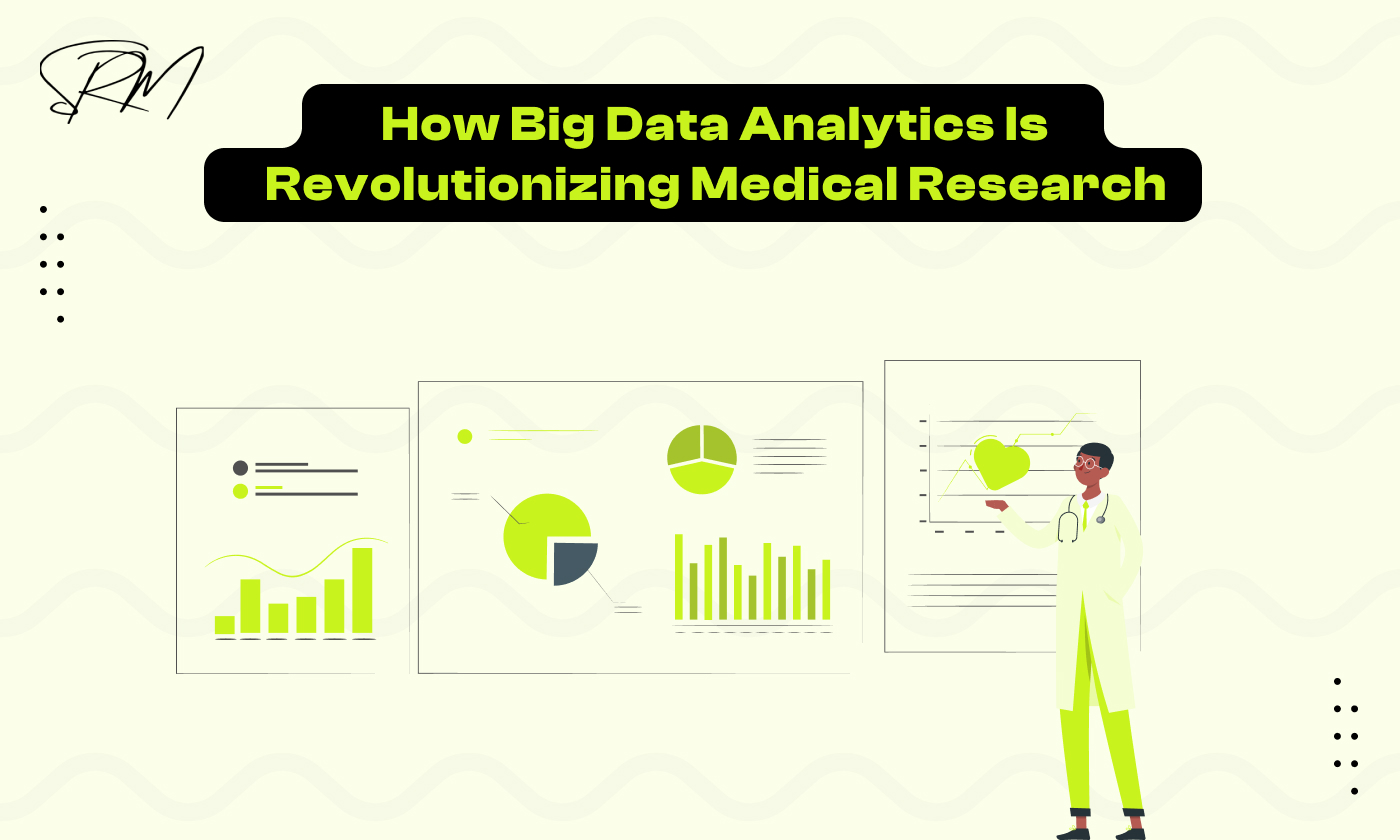
How Big Data Analytics Is Revolutionizing Medical Research
How Big Data Is Shaping the Next Era of Medical Discoveries
Big Data Analytics is no longer just a buzzword in healthcare. It is a driving force behind revolutionary changes in medical research. With the ability to process massive amounts of structured and unstructured data from clinical trials, electronic health records, wearable devices, and genomic studies, researchers can now uncover insights that were previously impossible.
From accelerating drug discovery to predicting disease outbreaks, Big Data enables medical professionals to make faster, more informed decisions. It is also paving the way for personalized medicine, where treatments are tailored to a patient’s genetic makeup, lifestyle, and health history. Big Data Analytics is helping medicine transition from reactive care to proactive, predictive, and precision-driven solutions.
What Is Big Data Analytics?
Big Data Analytics refers to the process of collecting, processing, and analyzing extremely large datasets to identify patterns, correlations, and actionable insights. Unlike traditional analytics, which handles limited datasets, Big Data Analytics can work with millions or even billions of data points in real time.
In medical research, these datasets include:
- Electronic Health Records (EHRs)
- Genetic and genomic data
- Imaging data such as MRI and CT scans
- Clinical trial results
- Data from wearable health devices and mobile apps
By using advanced tools like machine learning, AI, and predictive analytics, researchers can uncover trends, predict outcomes, and generate new hypotheses. This ultimately improves patient care and accelerates scientific discovery.
Why It Matters in Medical Research
The stakes in medical research are high. Lives are at risk, and delays can cost millions. Big Data Analytics matters because it allows researchers to:
- Speed Up Discoveries: Advanced algorithms can analyze datasets faster than traditional methods, reducing the time it takes to develop new drugs or treatments
- Improve Accuracy: By analyzing diverse datasets, researchers can minimize errors and gain more reliable results
- Personalize Treatments: Data-driven insights allow doctors to design therapies tailored to individual patients’ needs
- Predict and Prevent Diseases: Big Data helps identify patterns that indicate potential outbreaks or high-risk patients, enabling preventive care
Big Data Analytics is transforming medical research from a slow, trial-and-error process into a data-driven, precision-oriented approach, shaping the future of healthcare for generations to come.
The Role of Big Data in Medical Research
Big Data plays a very important role in modern medical research. It helps researchers collect, store, and analyze huge amounts of health information. This information comes from many sources, such as hospitals, laboratories, wearable devices, and medical studies. By using Big Data, researchers can discover patterns and trends that were not visible before.
Big Data allows scientists to make research faster and more effective. It helps in finding new treatments, understanding diseases better, and making healthcare more personalized for patients. Without Big Data, medical research would take much longer and be less accurate.
Analyzing Massive Health Datasets
Medical research generates a huge amount of data every day. This includes patient records, lab test results, MRI and CT scans, genetic information, and data from clinical trials. Big Data Analytics helps researchers organize and analyze these massive datasets quickly.
For example, instead of manually reviewing thousands of patient records, researchers can use analytics tools to identify important trends or anomalies in seconds. This saves time and allows scientists to focus on finding solutions instead of handling data manually.
Improving Accuracy and Insights
One of the biggest benefits of Big Data in medical research is accuracy. By analyzing large datasets, researchers can reduce errors and make better predictions. They can see hidden patterns, compare results across different groups, and understand diseases more deeply.
Big Data also helps in creating predictive models, which can forecast the risk of diseases or the likely outcome of a treatment. This gives doctors and researchers better insights to make smarter decisions and develop treatments that are safer and more effective.
Applications of Big Data Analytics in Medical Research
Big Data Analytics helps researchers turn massive amounts of complex medical information into actionable insights. It allows them to spot patterns, understand disease mechanisms, and make predictions that were impossible with traditional methods. By applying these insights, medical research becomes faster, more accurate, and more focused on solving real-world healthcare challenges.
Data Analytics is not just about collecting information; it is about using that data to make real-world improvements in medical research. Here are some of the most important applications:
Drug Discovery and Development
Developing new medicines is usually a long and expensive process. Big Data Analytics speeds this up by analyzing large datasets from lab experiments, patient records, and previous drug studies. Researchers can identify which compounds are most likely to work and predict possible side effects before clinical trials.
This not only reduces the time and cost of drug development but also increases the chances of creating safer and more effective medicines.
Genomic Research and Personalized Medicine
Genomics is the study of a person’s genes and DNA. Big Data allows scientists to analyze genetic information from thousands of patients to understand how different genes affect health.
With this information, doctors can create personalized treatments tailored to each patient’s genetic makeup. For example, cancer treatments can be designed to target the specific mutations in a patient’s tumor, improving success rates and reducing side effects.
Clinical Trials Optimization
Clinical trials are essential for testing new treatments, but they are often time-consuming and complex. Big Data Analytics helps researchers:
- Identify suitable participants faster
- Monitor patient responses in real time
- Analyze trial results more accurately
This optimization improves the efficiency of clinical trials, shortens the research timeline, and ensures more reliable results.
Epidemiology and Disease Tracking
Big Data Analytics is crucial in tracking diseases and understanding public health trends. By analyzing data from hospitals, social media, and health agencies, researchers can detect outbreaks early, monitor the spread of diseases, and predict future risks.
For example, during flu season or a pandemic, Big Data can help public health authorities make informed decisions, allocate resources effectively, and prevent large-scale outbreaks.
Key Technologies Driving Big Data in Healthcare
Big Data Analytics in medical research is made possible by advanced technologies that help collect, store, and analyze massive amounts of medical information. These technologies are transforming the way researchers understand diseases, develop treatments, and improve patient care.
These technologies not only make research faster and more efficient but also enable deeper insights that were impossible with traditional methods. By combining large datasets with powerful computing tools, researchers can uncover hidden patterns, predict outcomes, and make data-driven decisions that improve patient care and accelerate medical discoveries. The integration of these technologies is reshaping the future of healthcare research on a global scale.
Here are the main technologies driving this change:
Machine Learning and AI
Machine learning and artificial intelligence (AI) allow computers to learn from data and make predictions without explicit instructions. In healthcare, AI can analyze patient records, lab results, medical images, and genomic data to detect patterns that humans might overlook.
For example, AI algorithms can detect early signs of diseases like cancer from imaging scans, often faster and more accurately than traditional methods. Machine learning is also used in drug discovery, helping researchers identify promising compounds quickly by predicting their effectiveness and potential side effects.
AI-powered chatbots and virtual assistants are being used in hospitals to provide real-time support to patients and staff, reducing workload and improving efficiency. These applications demonstrate how AI and machine learning are revolutionizing healthcare research and patient care.
Predictive Analytics
Predictive analytics uses historical and current data to forecast future outcomes. In medical research, it is used to anticipate disease outbreaks, predict patient responses to treatments, and identify high-risk patients before symptoms appear.
For instance, hospitals can use predictive models to foresee which patients are likely to be readmitted, allowing doctors to provide targeted care. Similarly, pharmaceutical companies use predictive analytics to determine which drugs are likely to succeed in clinical trials, reducing costs and saving time.
Predictive analytics also helps public health officials by analyzing trends in infectious diseases, allowing them to prepare resources and interventions in advance. By turning data into actionable insights, predictive analytics improves decision-making at every level of healthcare.
Cloud Computing for Medical Data
Cloud computing allows researchers and medical institutions to store and access enormous datasets securely. Instead of relying on physical servers, cloud solutions provide scalable storage and powerful computing resources that can handle massive volumes of medical data.
With cloud computing, research teams from different parts of the world can collaborate in real time, sharing patient records, genomic data, and clinical trial results. This speeds up research, reduces costs, and ensures that data is always backed up and secure.
Cloud technology also enables AI and analytics tools to process data faster, allowing researchers to run complex algorithms without the need for expensive local hardware. This is particularly important in genomics and large-scale clinical trials, where datasets can reach terabytes in size.
Data Visualization Tools
Data visualization tools convert complex medical datasets into easy-to-understand charts, graphs, and dashboards. By visualizing data, researchers can quickly spot trends, identify patterns, and communicate results effectively.
For example, a dashboard showing patient outcomes across multiple hospitals can help identify best practices and areas for improvement. Visualization tools also make it easier to present findings to non-technical stakeholders such as hospital administrators, policymakers, and funding agencies.
Advanced visualization tools can even create interactive models where researchers can explore data dynamically, compare different variables, and generate insights in real time. This makes the research process more transparent, collaborative, and actionable.
Benefits of Big Data Analytics in Medical Research
Big Data Analytics is transforming medical research by making studies faster, more accurate, and more cost-effective. It allows researchers and healthcare professionals to make informed decisions that directly improve patient care.
One of the main benefits of Big Data is that it allows researchers to analyze vast amounts of complex information from different sources, such as patient records, lab tests, imaging scans, and genetic data. By combining these datasets, researchers can uncover patterns and insights that were impossible to detect using traditional methods. This helps in identifying new treatments, understanding diseases better, and improving healthcare outcomes.
Another benefit is that Big Data supports collaboration among researchers and institutions worldwide. Cloud-based platforms and advanced analytics tools allow teams to share data securely and work together in real time. This not only speeds up research but also ensures that findings are more reliable and applicable across different populations and regions.
Big Data is not only transforming healthcare but also reshaping the way businesses make decisions. By analyzing large datasets, organizations can uncover trends, predict outcomes, and optimize strategies in much the same way researchers use data to improve patient care. If you want to explore how Big Data drives smarter decision-making in the business world.
Faster Discoveries and Innovation
Big Data enables researchers to analyze enormous datasets quickly, accelerating the discovery of new treatments and therapies. By processing large amounts of genetic, clinical, and imaging data, researchers can bring innovative treatments to patients sooner than ever before.
Key advantages include:
- Speeds up drug discovery by identifying promising compounds faster
- Helps detect potential side effects before clinical trials
Enhanced Patient Outcomes
Big Data helps create personalized treatments and improve patient care. By analyzing patterns in patient data, doctors can make more accurate diagnoses and recommend effective therapies. This proactive approach reduces complications and improves overall patient outcomes.
Cost Reduction in Research Processes
Medical research can be expensive, but Big Data Analytics helps reduce costs by optimizing processes. By minimizing wasted time and resources, researchers can conduct more studies efficiently without overspending.
How it helps:
- Focuses on promising treatment options, reducing trial-and-error costs
- Streamlines clinical trials with faster data analysis
Data-Driven Decision Making
Big Data ensures that decisions in medical research are based on evidence rather than guesswork. Decisions backed by data lead to better healthcare policies, efficient operations, and higher-quality patient care.
Challenges in Implementing Big Data Analytics
While Big Data Analytics offers tremendous benefits for medical research, implementing it is not without challenges. Researchers and healthcare organizations often face obstacles that can slow down projects or affect the accuracy of results. Understanding these challenges is crucial for successful adoption.
These challenges often require not just technology, but also strategic planning, skilled personnel, and collaboration across departments. Organizations must carefully design data management practices, invest in the right tools, and ensure that staff are trained to handle complex datasets. By addressing these issues early, healthcare institutions can maximize the benefits of Big Data while minimizing risks and inefficiencies.
Data Privacy and Security Concerns
Medical data is extremely sensitive, and protecting patient privacy is a top priority. Collecting and storing large amounts of health data increases the risk of data breaches or unauthorized access. Hospitals and research institutions must ensure that all data is encrypted, stored securely, and accessed only by authorized personnel.
At the same time, patient consent and ethical considerations must be strictly followed. Failure to comply with privacy standards can result in legal consequences and damage trust in healthcare institutions.
Data Standardization and Integration
Big Data in healthcare comes from multiple sources such as EHRs, lab results, imaging data, and wearable devices. These datasets often have different formats, structures, and standards, making it difficult to combine and analyze them effectively.
Challenges include:
- Converting diverse datasets into a consistent format
- Integrating real-time data from different systems
- Ensuring data quality and accuracy
Without proper standardization, analytics results may be unreliable, which can affect research outcomes.
Handling Data Complexity
Medical datasets are not only large but also highly complex. They include structured data (like lab results) and unstructured data (like doctor notes or medical images). Analyzing such diverse data requires advanced tools and skilled professionals.
Researchers often face difficulties in:
- Processing large volumes of data efficiently
- Managing unstructured data effectively
- Extracting meaningful insights from complex datasets
Handling this complexity is critical for accurate predictions and reliable research results.
Regulatory and Compliance Issues
Healthcare is a highly regulated industry. Big Data projects must comply with local and international regulations such as HIPAA, GDPR, and other medical data laws. Non-compliance can lead to heavy fines and legal issues.
Organizations need to establish strong governance frameworks to ensure compliance at every stage of data collection, storage, and analysis. This includes maintaining audit trails, securing data access, and regularly updating policies to meet evolving regulations.
Future Trends in Big Data-Driven Medical Research
Big Data Analytics is continually evolving, and its role in medical research is only going to grow in the coming years. New technologies and approaches are transforming how diseases are studied, treatments are developed, and patient care is delivered.
As healthcare systems generate more data than ever before, the integration of Big Data with emerging technologies like AI, IoT, and cloud computing will enable faster discoveries, more accurate predictions, and better patient outcomes. Researchers will be able to analyze larger and more diverse datasets, uncover hidden patterns, and make decisions based on real-world evidence, ultimately transforming the way medical research is conducted worldwide.
Here are some of the most important trends shaping the future of medical research:
AI-Powered Diagnostics
Artificial intelligence (AI) is expected to play an even bigger role in diagnosing diseases in the future. By analyzing medical images, lab results, and patient histories, AI can detect early signs of conditions like cancer, heart disease, or neurological disorders.
- AI-powered diagnostics will help doctors make faster and more accurate decisions
- Predictive algorithms can identify patients at risk before symptoms appear
- Machine learning models will continue to improve as more data becomes available
This trend will make healthcare more proactive, allowing for earlier intervention and better outcomes.
Precision Medicine and Genomics
Big Data is driving the rise of precision medicine, where treatments are customized to an individual’s genetic makeup, lifestyle, and health history.
- Genomic data analysis will enable doctors to design personalized treatment plans
- Researchers can identify genetic markers linked to specific diseases
- Therapies will become more targeted, reducing side effects and improving effectiveness
Precision medicine represents a major shift from “one-size-fits-all” treatments to highly personalized healthcare.
Real-Time Data Monitoring and Analysis
With wearable devices, mobile health apps, and remote monitoring tools, real-time data collection is becoming a standard practice in healthcare.
- Continuous monitoring allows doctors to detect changes in patient health immediately
- Researchers can analyze trends in real time to improve clinical trials and studies
- Real-time data helps in early detection of epidemics and public health management
This trend makes healthcare more responsive and data-driven, benefiting both patients and researchers.
Collaboration Across Global Research Networks
Big Data allows researchers from around the world to collaborate more effectively than ever before. Cloud-based platforms and secure data-sharing tools make it possible to pool datasets from multiple countries, leading to faster discoveries and more comprehensive studies.
- Global collaboration improves research accuracy and diversity of data
- Shared resources reduce duplication of efforts and speed up innovation
- International networks enable rapid responses to emerging health crises
Collaboration powered by Big Data is breaking geographical barriers, accelerating medical research, and paving the way for global healthcare solutions.
FAQs
What is Big Data Analytics in medical research?
Big Data Analytics in medical research is the process of collecting, processing, and analyzing large and complex datasets, such as patient records, genomic data, clinical trials, and medical imaging. It helps researchers identify patterns, make predictions, and improve healthcare outcomes.
How does Big Data improve patient care?
By analyzing vast amounts of health data, researchers and doctors can create personalized treatment plans, predict patient risks, and detect diseases early. This leads to faster diagnoses, more effective treatments, and better overall patient outcomes.
What are the main challenges of using Big Data in healthcare?
Challenges include data privacy and security concerns, integration of diverse datasets, handling complex information, and complying with healthcare regulations. Overcoming these challenges is essential for accurate and reliable research.
Which technologies are used in Big Data-driven medical research?
Key technologies include Artificial Intelligence (AI), Machine Learning, Predictive Analytics, Cloud Computing, and Data Visualization tools. These help researchers analyze large datasets efficiently and gain actionable insights.
What is the future of Big Data in medical research?
The future includes AI-powered diagnostics, precision medicine, real-time monitoring, and global collaboration among researchers. Big Data will continue to accelerate discoveries, improve patient care, and make medical research more efficient and accurate.
Conclusion
Big Data Analytics is transforming medical research in ways that were once unimaginable. From speeding up drug discovery to enabling personalized treatments, it is helping researchers and healthcare professionals make faster, more accurate, and data-driven decisions.
While there are challenges such as data privacy, integration, and regulatory compliance, the benefits far outweigh the obstacles. With the advancement of technologies like AI, predictive analytics, cloud computing, and real-time monitoring, Big Data is shaping the future of healthcare and driving innovation in research.
As medical research continues to evolve, Big Data will remain a key tool for improving patient outcomes, reducing costs, and accelerating discoveries. For researchers, healthcare providers, and policymakers, embracing Big Data Analytics is no longer optional, it is essential for creating a healthier and more efficient future.
Moreover, Big Data Analytics is fostering global collaboration among researchers and institutions, enabling the sharing of insights and discoveries across borders. This collaborative approach accelerates innovation, helps tackle complex health challenges, and ensures that breakthroughs in medical research benefit patients worldwide. By leveraging Big Data effectively, the healthcare industry can continue to move toward a future of smarter, faster, and more precise medical solutions.

January 20, 2026
Looker’s Latest Dashboard Enhancements: What’s New and How...
January 20, 2026