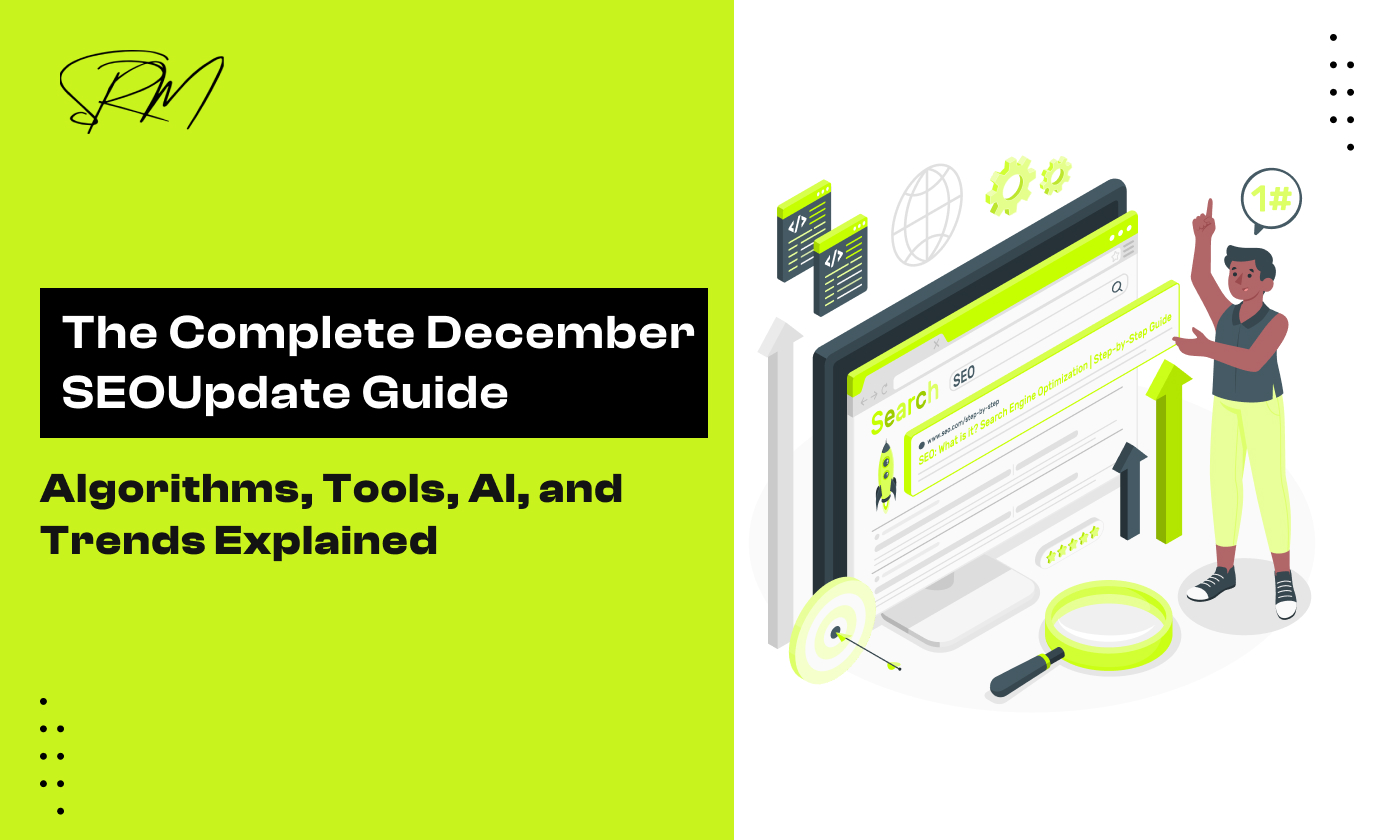
The Complete December SEO Update Guide: Algorithms, Tools, AI, and Trends Explained
Introduction: Why December SEO Updates Matter
December SEO updates are important because they often set the direction for how search will work in the coming year. When Google rolls out updates during this time, it is not just making small adjustments. It is usually preparing its systems for new ranking priorities, better search quality, and stronger AI integration.
For website owners, marketers, and SMBs, December updates can explain sudden changes in traffic, rankings, or visibility. Some websites may see growth, while others may notice a drop. These changes are rarely random. They reflect how well a website matches Google’s focus on helpful content, user intent, page experience, and trust.
December is also when Google improves its tools and reporting systems. Updates in Google Search Console, analytics tracking, and AI-powered search features give clearer signals about what is working and what needs improvement. Ignoring these changes can lead to outdated SEO strategies that no longer perform well.
Another reason December SEO updates matter is planning. What changes now often becomes the foundation for SEO trends in the next year. Understanding these updates helps businesses refine content, improve technical SEO, choose the right tools, and prepare for future algorithm changes.
December SEO updates are not just about rankings for one month. They help shape long-term SEO strategy, making them essential for anyone who wants steady growth and better search visibility going forward.
Table of Contents
Google Algorithm Updates in December Explained
Google algorithm updates released in December are often more impactful than they seem. These updates usually act as a foundation for how Google Search will behave in the upcoming year. Instead of fixing one small issue, Google focuses on improving overall search quality, relevance, and user satisfaction.
December updates affect many websites across different industries. Blogs, e-commerce stores, service-based businesses, and informational websites often experience ranking changes during this period.
What Are Google Algorithm Updates?
Google algorithm updates are changes made to how Google ranks web pages in search results. These updates decide which pages appear higher and which move down. Google regularly updates its algorithm to make sure users get the most helpful, accurate, and trustworthy information.
December updates are usually broad in nature and focus on improving the overall search experience rather than targeting one specific problem.
December Core Updates and Their Purpose
The main purpose of December algorithm updates is to improve how Google understands user intent. Google wants to show results that best match what people are actually searching for.
During December, Google refined how it evaluates content usefulness, topic relevance, website credibility, and overall user experience. Pages that clearly answer questions and provide updated, easy-to-understand information benefited the most.
Focus on Content Quality and User Value
One of the biggest changes seen in December was the stronger focus on content quality. Pages created only to rank, filled with keywords, or lacking depth saw reduced visibility.
Google rewarded content that is written for real users, shares practical experience, provides complete answers, and is well-structured and easy to read. This shows that quality now matters more than the number of pages published.
E-E-A-T Signals Became More Important
December updates reinforced Google’s focus on E-E-A-T, which stands for Experience, Expertise, Authority, and Trust.
Websites performed better when they clearly showed who created the content, demonstrated real knowledge or experience, and built trust through accurate and reliable information. This was especially important for sensitive topics like health, finance, and business.
Ranking Changes Are Re-Evaluations, Not Penalties
Ranking drops after a core update do not mean a website is penalized. Google reassesses content across the web and adjusts rankings based on current quality standards.
If rankings decreased, it often means that other pages provided better value or matched user intent more effectively. Improving content quality, clarity, and relevance can help regain visibility over time.
Continuous Updates, Not One-Time Changes
Google now makes smaller updates on a regular basis. December updates are part of a continuous improvement process rather than a single event.
This means SEO success depends on ongoing content improvements, regular performance monitoring, and focusing on long-term value instead of quick fixes.
Major SEO Ranking Changes Observed After the Update
After the December Google algorithm update, many website owners noticed clear changes in rankings and organic traffic. These changes were seen across different industries and website types. Some sites experienced growth, while others saw drops, even when no major changes were made on their end. This is common after a core update, as Google reassesses content quality and relevance across the web.
Noticeable Ranking Volatility Across Websites
One of the first signs after the update was ranking volatility. Keywords moved up and down more frequently than usual, especially for competitive search terms. This happened because Google was testing and adjusting how it ranks pages based on updated quality signals. Websites with strong fundamentals, such as helpful content and good user experience, usually stabilized faster. Sites relying on outdated SEO tactics or thin content saw longer periods of fluctuation.
Traffic Changes Without Major Ranking Drops
In some cases, websites did not lose rankings but still experienced traffic drops. This happened due to changes in how search results are displayed. Features like AI-generated answers, featured snippets, and other rich results pushed organic listings lower on the page. As a result, clicks shifted even when keyword positions remained the same. This made it important to look beyond rankings and analyze impressions, clicks, and click-through rate in Google Search Console.
Better Performance for High-Quality and Intent-Focused Content
Websites with clear, in-depth, and user-focused content performed better after the update. Pages that answered search queries fully and matched user intent saw improved visibility. Content that was well-organized, easy to read, and regularly updated gained more trust from Google. Informational content with real examples, step-by-step guidance, and clear explanations stood out compared to generic or copied material.
Decline for Thin, Outdated, or Over-Optimized Pages
Pages with low-quality content were among the most affected. This included articles with little value, outdated information, excessive keyword usage, or content created mainly for search engines rather than users. Websites that published a high volume of similar or duplicate pages also saw ranking drops. Google appeared to favor fewer, stronger pages over many weak ones.
Impact on Different Website Types
Blogs, affiliate websites, and niche informational sites were more sensitive to ranking changes. E-commerce and service-based websites also saw shifts, especially for category and service pages with limited content. Local businesses noticed changes mainly when their content lacked clarity, trust signals, or proper optimization. Websites with strong brand presence and clear expertise were generally more stable.
Importance of Monitoring the Right SEO Metrics
After the update, it became clear that tracking only keyword rankings is not enough. Website owners need to monitor impressions, clicks, engagement, and page-level performance. Using tools like Google Search Console and SEO audit tools helps identify which pages gained or lost visibility and why. This data is essential for planning content improvements and recovery strategies.
AI and Google Search: What Changed in December
December brought visible changes in how Google uses AI to improve search results. These updates focused on making search more helpful, faster, and closer to how people naturally ask questions. AI did not replace traditional SEO, but it clearly influenced how content is understood and shown.
Google’s AI systems became better at understanding context rather than just keywords. This allowed search results to match user intent more accurately, even when search queries were long or conversational.
Some key changes observed in December include:
- More AI-driven answers in search results
Google displayed AI-generated summaries more often for informational queries. These summaries helped users get quick answers without opening multiple pages. - Shift in user clicks and behavior
Even when rankings stayed the same, some websites saw fewer clicks because users found basic answers directly on the search page. Content that offered deeper explanations and additional value continued to attract clicks. - Higher importance of clear and structured content
AI systems performed better with content that had a clear flow. Pages with simple language, focused topics, and logical structure were easier for AI to understand and reference. - Reduced reliance on exact keywords
Google became better at matching content with intent instead of exact keyword phrases. Natural, human-style writing performed better than content written only for keyword placement. - Stronger focus on trust and accuracy
AI-powered search favored content that appeared reliable and well-researched. Websites that clearly showed expertise, updated information, and transparent authorship gained more visibility.
These changes indicate that Google is moving toward a more intelligent search experience where usefulness matters more than tactics.
Google Search Console Updates and New Features
Google Search Console received several useful updates that made it easier for website owners and SEO professionals to understand performance after the December changes. These updates focused on better reporting, clearer insights, and easier analysis of search data.
One noticeable improvement was how data can be viewed and analyzed. Search Console now helps users understand trends over longer periods instead of focusing only on daily changes. This is especially useful during algorithm updates when rankings and traffic fluctuate.
Some important Search Console updates and improvements include:
- Improved performance reporting: Search Console made it easier to compare performance across different time ranges. This helps identify whether traffic changes are part of a short-term fluctuation or a long-term trend.
- Better visibility into clicks and impressions: Website owners can now better understand how impressions, clicks, and click-through rate change even when rankings remain stable. This is helpful when AI-powered results affect user behavior.
- Clearer page-level insights: The updates made it easier to identify which specific pages gained or lost visibility after the update. This allows focused improvements instead of making site-wide changes without data.
- Faster issue detection and monitoring: Search Console continues to help detect indexing, crawling, and page experience issues early. Fixing these issues quickly helps prevent long-term performance drops.
- Stronger support for content optimization: By combining query data with page performance, Search Console helps identify content gaps and optimization opportunities based on real search behavior.
These updates highlight the growing importance of Search Console as a core SEO tool. It is no longer just a monitoring platform. It plays a key role in decision-making and strategy building.
SEO Tools Updates and Must-Have Tools
December 2025 saw several updates to SEO tools, along with the continued rise of AI-powered platforms that help marketers analyze, optimize, and track websites more efficiently. Using the right tools is now more important than ever, especially after the Google algorithm and AI search changes. The right mix of tools can save time, improve content quality, and give insights that directly impact rankings.
Some of the major updates and must-have tools include:
SEMrush
- Added new AI features for keyword research and content optimization.
- Provides insights into competitor strategies and helps identify high-value keywords.
- Useful for tracking ranking changes after Google updates.
Ahrefs
- Improved backlink analysis and content gap detection.
- Offers site audit updates that detect technical SEO issues faster.
- Helps monitor how competitors are performing and what content Google favors.
Google Search Console (GSC)
- New AI-assisted reporting features suggest filters and breakdowns automatically.
- Longer time-range analysis helps track trends after core updates.
- Page-level performance data is now easier to access for content optimization.
Surfer SEO
- AI-driven content recommendations help improve rankings based on real-time SERP data.
- Topic clustering features help organize content for better user experience and SEO.
Screaming Frog
- Updated for faster site crawling and better detection of technical issues like broken links, duplicate content, and page speed problems.
Ubersuggest and SEO Minion
- Free or low-cost tools for keyword research, on-page checks, and competitor analysis.
- Useful for SMBs or smaller websites that cannot afford full-scale SEO suites.
Other notable trends:
- AI-powered SEO is becoming central to all major tools. Many platforms now analyze content not just for keywords but also for intent, structure, and readability.
- Integration between analytics, AI, and content tools allows marketers to act faster on insights and improve website performance after updates.
- Free tools remain valuable for beginners, but professional paid tools give a competitive edge by providing detailed audits and actionable recommendations.
Key SEO Trends That Will Shape 2026
As we move into 2026, SEO is evolving faster than ever. The December updates from Google, combined with advances in AI and search technologies, are shaping how websites will need to optimize for visibility and engagement. Staying ahead of these trends is essential for businesses, marketers, and content creators who want to maintain or improve search rankings.
AI-Driven Search and Content Optimization
AI continues to influence how Google understands content and user intent. Tools that analyze search trends, keywords, and content structure using AI will become essential. Websites will need to:
- Focus on clear, structured, and intent-driven content.
- Use AI tools for topic research and content suggestions.
- Optimize pages for natural language rather than just keywords.
E-E-A-T (Experience, Expertise, Authority, Trust) Will Remain Crucial
Google has emphasized E-E-A-T for years, and it will continue to play a major role in 2026. Websites that establish credibility through high-quality content, transparent authorship, and trusted references will be rewarded. This is especially important for YMYL (Your Money Your Life) topics like health, finance, and business.
Voice Search and Conversational Queries
As AI assistants and voice search adoption grow, websites will need to optimize for conversational queries. People are now asking longer, question-based searches, and content should anticipate these natural language queries. Tips include:
- Using FAQ sections and structured data.
- Answering questions clearly in short, concise paragraphs.
- Incorporating long-tail keywords naturally.
Mobile-First and Page Experience Optimization
Mobile performance and user experience continue to be a ranking factor. Google prioritizes sites that load quickly, are easy to navigate, and provide a seamless mobile experience. In 2026, Core Web Vitals and mobile usability will remain key areas to monitor and improve.
Integration of Video and Visual Content
Video content, infographics, and visual storytelling are becoming increasingly important. Google’s AI can now analyze video content and image relevance, giving websites new ways to appear in search results. Adding optimized video and visual content can improve engagement and rankings.
Content Depth and Intent Alignment
Shallow content that simply repeats information will not perform as well. Websites need to create comprehensive, actionable, and unique content that fully addresses user intent. Combining text, visuals, and structured data helps Google understand and rank content better.
Local SEO and Hyper-Relevance
Local search will continue to grow, especially with mobile and voice search usage. Businesses will need to:
- Optimize Google Business Profiles.
- Use localized keywords and content.
- Build local backlinks and citations for trust.
Frequently Asked Questions (FAQs)
What was the main focus of the December SEO update?
The December update focused on improving content relevance, user intent understanding, and overall search quality. Websites with helpful, clear, and trustworthy content were rewarded.
How did AI affect Google Search in December?
AI changes made search results smarter by understanding context and intent better. AI-generated summaries appeared more often, providing users quick answers while rewarding content that is clear and well-structured.
Which SEO tools are most useful after the update?
Tools like Google Search Console, SEMrush, Ahrefs, Surfer SEO, and Screaming Frog are essential. AI-powered features in these tools help track performance, analyze competitors, and optimize content effectively.
How can I recover if my website lost rankings?
Focus on improving content quality, matching user intent, and updating outdated pages. Regular monitoring with SEO tools and following Google’s guidelines can help regain visibility.
What SEO trends should I focus on for 2026?
Key trends include AI-driven content, E-E-A-T signals, mobile-first optimization, voice search, comprehensive content, and strong local SEO. Creating content that adds real value will be critical.
Conclusion
The December SEO updates highlighted one clear message: SEO is evolving, and websites must focus on providing real value to users. From Google’s algorithm changes to AI-driven search and new tools, the way content is evaluated has shifted significantly.
High-quality, clear, and trustworthy content now performs better than keyword-stuffed or thin pages. AI in search is helping Google understand context and intent, which means content must be structured, user-friendly, and focused on answering real questions. SEO tools like Google Search Console, SEMrush, and Ahrefs are more important than ever for tracking performance, identifying opportunities, and adapting strategies quickly.
Looking ahead to 2026, the key to long-term SEO success lies in combining human-centered content with technology insights. Focus on creating content that educates, informs, and engages users while keeping up with trends like AI optimization, E-E-A-T, mobile-first design, and local SEO.
SEO is no longer just about rankings, it’s about helping people find what they need in the best possible way. Websites that adapt, monitor, and consistently improve will continue to thrive, regardless of algorithm updates.

January 1, 2026
What’s New in Tableau Agent: Latest Features and...

January 1, 2026