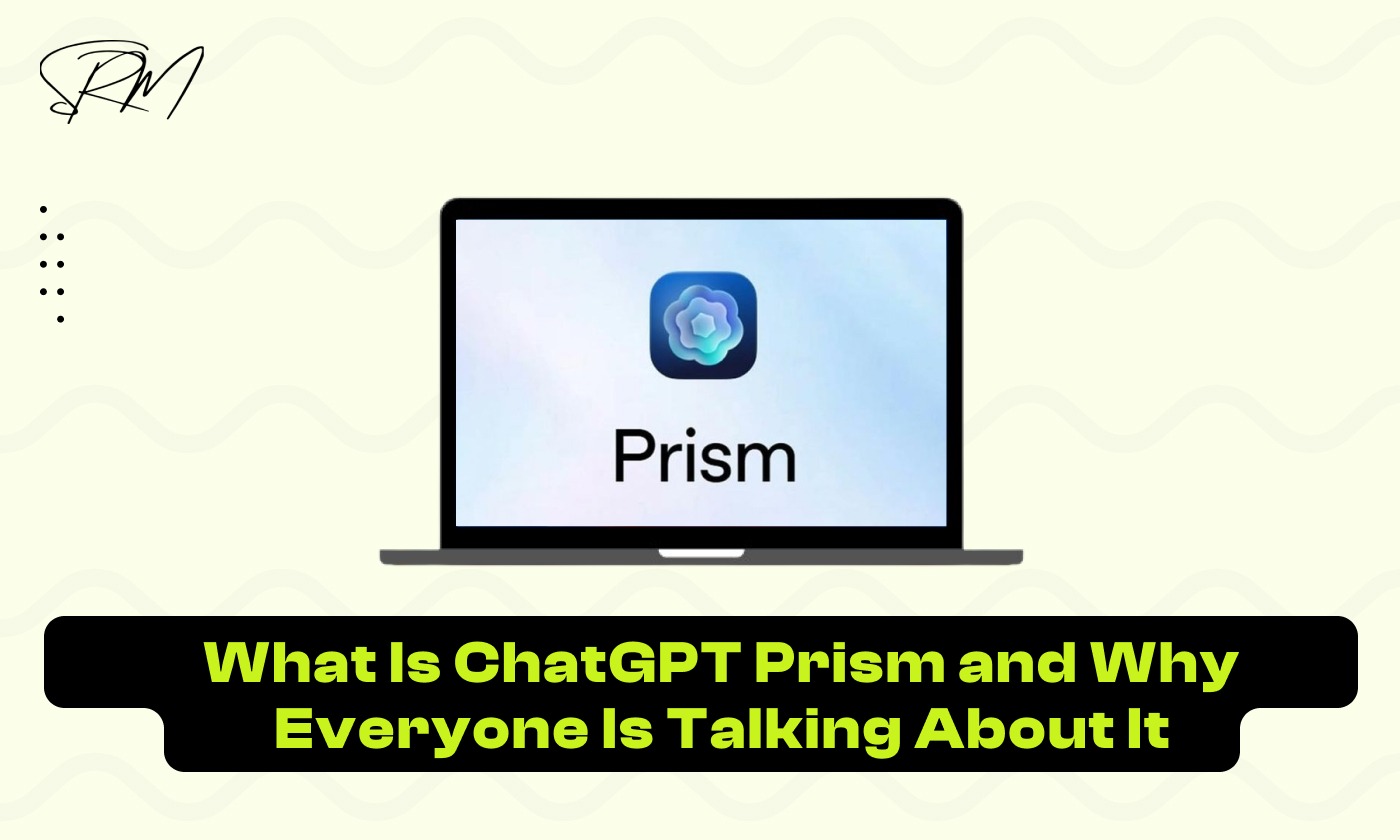
What Is ChatGPT Prism and Why Everyone Is Talking About It
ChatGPT Prism is suddenly everywhere because it represents a clear shift in how people expect AI to work in 2026. Instead of being just a question answer tool, Prism introduces the idea of an AI native workspace where thinking, writing, reasoning, and collaboration happen in one continuous flow. Researchers, writers, and knowledge workers are paying attention because Prism moves AI from the side panel into the core of how documents are created and refined.
The buzz has grown fast because Prism arrives at a time when traditional tools feel fragmented. Users are tired of switching between chat windows, editors, citation tools, and collaboration platforms. ChatGPT Prism promises a more focused environment where AI understands long context, stays aware of the entire document, and assists in real time without breaking concentration. This shift from conversational AI to embedded intelligence is why Prism is being discussed across tech circles, research communities, and productivity spaces all at once.
Table of Contents
What Is ChatGPT Prism?
ChatGPT Prism is a free, AI native workspace launched by OpenAI on January 27, 2026, designed specifically for scientific writing, research, and collaboration. Unlike traditional chat based AI tools, Prism embeds advanced AI directly into a document focused environment, allowing users to write, edit, reason, and collaborate without leaving their workspace. It is powered by GPT 5.2, OpenAI’s latest reasoning model built for long context understanding and complex analytical tasks
At its core, ChatGPT Prism is a LaTeX native platform. Researchers can draft papers, format equations, manage references, and compile documents in real time, all while the AI remains aware of the full document context. This means Prism can assist with refining arguments, fixing equations, improving clarity, and validating structure in ways that standalone chat tools cannot
Prism was created to solve a long standing problem in research workflows: fragmentation. Scientists often juggle multiple tools for writing, citations, collaboration, and AI assistance. ChatGPT Prism brings all of these into a single cloud based workspace, offering unlimited projects and collaborators to anyone with a ChatGPT personal account. This unified approach is why many see Prism not as another AI feature, but as a foundational shift in how research work is done
ChatGPT Prism is OpenAI’s move from helping users answer questions to helping them do serious work. It represents a new category of AI tools where intelligence lives inside the document itself, supporting deep thinking, long form writing, and real world collaboration at scale.
Why OpenAI Launched Prism Now
OpenAI launched ChatGPT Prism at a time when scientific and research workflows were becoming increasingly fragmented. Researchers often juggle multiple tools for writing, citations, equations, collaboration, and AI assistance, which slows down work and breaks context. Prism was introduced to unify these workflows into a single AI native workspace, allowing researchers to focus on actual work rather than switching between platforms.
The timing of the launch was also strategic. With the release of GPT 5.2, OpenAI now has the long context reasoning and analytical capabilities required for academic and scientific writing. Earlier AI models were effective for simple chat interactions but struggled to maintain awareness across entire papers, multi author projects, and complex methodologies. Prism leverages GPT 5.2 to become a true research companion, enabling seamless document creation, analysis, and collaboration.
Reasons Behind the Launch:
- Unified Research Workspace: Prism collapses fragmented workflows into one environment, reducing friction in writing, formatting, and collaborating across research projects.
- Advanced AI Capabilities with GPT 5.2: It takes advantage of GPT 5.2’s long context reasoning, allowing AI to assist with full length documents, complex equations, and multi author research projects.
- Strategic Shift Towards Scientific Collaboration: OpenAI is positioning itself as a partner in scientific progress, providing tools that are specifically designed for academic depth and real time collaboration.
- Accessible and Free for All Users: Prism is free with unlimited projects and collaborators, lowering barriers for students, independent researchers, and global teams.
- Accelerating Scientific Output: By embedding AI directly into the research environment, Prism aims to speed up high quality research and knowledge creation at scale.
Key Features of ChatGPT Prism (2026 Launch Overview)
ChatGPT Prism isn’t just another AI tool, it’s a complete research and writing workspace designed to streamline the way academics, researchers, and students work. By embedding AI directly into documents, Prism allows users to focus on content creation, problem solving, and collaboration without switching between multiple platforms. This makes the research process faster, more efficient, and more accurate.
With its launch in 2026, Prism leverages the latest advancements of GPT 5.2, providing long-context reasoning, advanced analysis, and real-time assistance. From drafting complex equations to managing references and collaborating across teams, Prism combines multiple research tools into a single AI-native platform, making it a game changer for anyone working on scientific or technical writing.
AI Embedded Directly Inside Documents
Unlike traditional AI chat tools, Prism embeds AI directly within your document, making it aware of the full context of your work. This allows it to suggest content improvements, rephrase sentences for clarity, check logical consistency, and spot gaps in arguments or methodology. Researchers no longer need to copy and paste content between different tools because AI assistance is always live and contextual, improving both efficiency and accuracy.
LaTeX Native Writing and Editing
Prism is designed for academics who rely heavily on complex equations, scientific notation, and technical formatting. Its LaTeX-first environment ensures equations render perfectly, references are properly formatted, and formatting errors are minimized. Users can write papers, reports, or theses with confidence that their document will meet publication standards. The AI can also assist in generating mathematical expressions, graphs, and tables seamlessly.
Unlimited Projects and Collaborators
Prism supports unlimited projects, allowing users to manage multiple research papers, experiments, or assignments at the same time. Collaborators can work together in real time, leave comments, track changes, and build on each other’s work. This makes Prism ideal for research labs, academic teams, and global collaboration, ensuring that multiple authors can contribute without losing version control or context.
Built-In Citation and Reference Management
Managing references and citations manually can be time consuming and error prone. Prism’s built-in citation manager automatically formats references according to popular academic styles such as APA, MLA, or Chicago. It can also generate bibliographies, track sources, and suggest related papers for reference. This ensures that all citations are accurate, up to date, and seamlessly integrated into the document.
Advanced Reasoning with GPT 5.2
Powered by GPT 5.2, Prism can perform high-level reasoning and support complex problem solving. It maintains long context awareness across entire documents, helping with drafting, summarizing, comparing datasets, or analyzing research trends. It is more than a writing assistant because it can propose hypotheses, identify inconsistencies, and suggest improvements to methodology or experimental design.
How ChatGPT Prism Is Different from Regular ChatGPT
While regular ChatGPT has been a revolutionary tool for answering questions, generating content, and assisting with simple tasks, ChatGPT Prism takes AI integration to a completely new level. Unlike the standard chat interface, Prism is designed as a full research and writing workspace where the AI is embedded directly into the document itself. This shift allows for more complex tasks, better context understanding, and seamless collaboration.
Regular ChatGPT works best for short interactions and standalone tasks. Prism, on the other hand, is built to handle long documents, multiple collaborators, and high-level reasoning, making it ideal for academic, scientific, and professional use. By focusing on workflow integration rather than chat responses alone, Prism allows researchers and knowledge workers to maintain productivity without constantly switching between tools.
Key Differences
- Document-Centric AI Assistance
Regular ChatGPT provides answers in a chat format that may require copying and pasting. Prism embeds AI directly into your documents, allowing it to assist in real time as you write, edit, and format content. - Long Context Awareness
Prism can maintain awareness of entire documents, multi-section projects, and ongoing research, while regular ChatGPT has limited memory of previous interactions. This makes Prism capable of understanding arguments, referencing earlier sections, and maintaining logical consistency. - LaTeX and Scientific Formatting Support
Regular ChatGPT does not support native LaTeX formatting, making it less suitable for complex equations or scientific papers. Prism is designed for academics and researchers, allowing seamless writing, editing, and rendering of mathematical and technical content. - Collaboration and Project Management
Prism allows multiple users to work on the same document in real time, track changes, and manage projects with unlimited collaborators. Regular ChatGPT does not support this level of collaboration and project organization. - Advanced Reasoning and Analysis
Powered by GPT 5.2, Prism can perform high-level reasoning, summarization, and analysis across entire documents. Regular ChatGPT is more suited for generating content in short bursts and cannot maintain deep analytical context across long form research documents. - Integrated Citations and References
Prism includes built-in citation management, automatically formatting references and generating bibliographies. Regular ChatGPT does not offer automated reference handling or academic style compliance.
Who Is ChatGPT Prism Built For
ChatGPT Prism is designed for anyone who works with research, writing, and complex information analysis. Unlike standard AI tools, Prism is purpose-built to handle academic, scientific, and technical workflows, making it ideal for individuals and teams who need both AI assistance and a structured workspace. Its features cater to users who require advanced reasoning, collaboration, and document management all in one platform.
By combining AI with a LaTeX-native environment, real-time collaboration, and built-in reference management, Prism meets the needs of a wide range of users. From students drafting assignments to research teams preparing high-stakes scientific publications, Prism is built to streamline workflows, reduce errors, and enhance productivity.
Who Can Benefit Most
Researchers and Academics: Those conducting experiments, writing papers, or analyzing complex datasets can use Prism to draft content, manage references, and maintain logical consistency across large documents.
PhD and Graduate Students: Students working on theses, dissertations, or research projects can leverage Prism to organize their work, collaborate with advisors, and ensure formatting and citations are accurate.
Research Teams and Labs: Teams collaborating on multi-author projects can work in real time, track contributions, and maintain a unified version of documents without losing context or important details.
Scientific Writers and Technical Authors: Professionals creating research reports, whitepapers, or technical documentation can benefit from Prism’s LaTeX support, AI reasoning, and advanced formatting capabilities.
Educators and Trainers: Teachers and academic mentors can use Prism to prepare lesson plans, research exercises, or collaborative projects for students, ensuring consistency and clarity.
Independent Researchers and Freelancers: Individuals working outside traditional institutions can access a high-quality AI workspace for free, allowing them to compete with established research teams while managing multiple projects efficiently.
Real World Use Cases of ChatGPT Prism
ChatGPT Prism is transforming the way researchers, academics, and knowledge workers approach their work. By embedding AI directly into documents and supporting advanced reasoning, Prism helps users save time, reduce errors, and collaborate efficiently. Its versatile design makes complex tasks simple, allowing users to focus on insights and creativity rather than formatting or workflow management.
Faster Research Paper Writing
Prism accelerates the writing process by suggesting phrasing improvements, maintaining logical flow, and helping structure documents according to academic standards. Users can draft sections quickly while the AI ensures coherence, grammar accuracy, and clarity, reducing time spent on revisions.
Additionally, Prism can analyze existing content and propose improvements or alternative ways to present arguments. This helps researchers maintain high-quality writing standards while also exploring new ways to communicate their findings effectively.
Efficient Management of Equations and Complex Math
With native LaTeX support, Prism allows users to write, edit, and format complex mathematical equations without errors. The AI can assist in generating formulas, checking calculations, and even visualizing data, making it ideal for STEM researchers and students.
Beyond formatting, Prism can also suggest simplifications, verify logical steps in mathematical proofs, and ensure consistency throughout a document. This feature reduces mistakes and saves significant time for anyone dealing with highly technical content.
Seamless Collaborative Academic Publishing
Multiple authors can work on the same document in real time, track changes, leave comments, and manage contributions efficiently. Prism ensures that collaboration does not break the document’s structure or context, enabling smooth multi-author publishing and project management.
It also supports version control and context awareness, allowing collaborators to see the history of edits and AI suggestions. This feature ensures transparency and accountability, making it easier for teams to maintain high-quality research outputs.
Converting Ideas into Structured Content
Prism helps users take rough notes, brainstormed ideas, or sketches and turn them into organized, structured documents. The AI assists in creating logical outlines, summarizing key points, and transforming raw input into polished, publication-ready content.
Moreover, Prism can identify gaps in the content or highlight areas that need more detail, helping users refine their ideas before they are finalized. This makes it an invaluable tool for turning scattered thoughts into professional, high-quality documents.
Why Everyone Is Talking About ChatGPT Prism
ChatGPT Prism has captured massive attention because it represents a major shift in how AI supports research, writing, and collaboration. Unlike previous AI tools that were limited to answering questions or generating small text snippets, Prism embeds intelligence directly into documents. This allows users to work smarter and faster while maintaining context, structure, and logical flow across entire research papers or projects. Its launch in 2026 comes at a time when researchers, students, and knowledge workers are seeking tools that can handle long-form content, complex equations, citations, and multi-author collaboration seamlessly.
Part of the excitement also comes from the fact that Prism is free and accessible to anyone with a ChatGPT account. This removes barriers for students, independent researchers, and global teams who previously had to rely on expensive research software. By combining AI assistance, real-time collaboration, and advanced reasoning within a single platform, Prism has become a standout tool across academic, scientific, and professional communities. Users are particularly impressed with its ability to analyze complex documents, suggest improvements, maintain logical consistency, and handle technical formatting natively.
Researchers, educators, and students are also talking about Prism because it streamlines workflows that were once cumbersome. Drafting papers, managing references, formatting complex equations, and coordinating multiple collaborators can now be done in one integrated workspace. This combination of advanced AI, accessibility, and workflow integration makes Prism not just another AI tool but a platform with the potential to reshape academic and research workflows, improving efficiency, accuracy, and collaboration for professionals and learners alike.
ChatGPT Prism vs Existing Research Tools
ChatGPT Prism is changing the way researchers and academics approach writing and collaboration. Traditional research tools often require juggling multiple applications for document creation, reference management, equation formatting, and team collaboration. This fragmented workflow can slow down productivity, introduce errors, and make it difficult to maintain consistent document quality. Prism addresses these issues by integrating AI assistance directly into a single, seamless workspace. It supports advanced reasoning, long-context understanding, real-time collaboration, LaTeX formatting, and automatic citation management, all in one platform.
While existing research tools like Microsoft Word, Overleaf, or EndNote focus on specific aspects of the research workflow, they do not offer AI-powered reasoning or context-aware suggestions. Researchers often have to switch between applications, manually format references, or struggle with maintaining collaboration across large documents. Prism streamlines all these tasks, allowing users to focus on content, insights, and creativity instead of repetitive administrative work.
ChatGPT Prism and Existing Research Tools
| Feature | ChatGPT Prism | Traditional Tools (Word, Overleaf, EndNote, Zotero) |
| AI Integration | Embedded AI for real-time suggestions, reasoning, and content improvement | Minimal to none; relies on user input and plugins |
| Document Context Awareness | Maintains long context across entire documents and projects | Limited context; often only handles current section or file |
| Collaboration | Unlimited real-time collaborators, version control, and comment tracking | Varies by tool; often requires third-party platforms or manual coordination |
| LaTeX Support | Native support for equations, scientific notation, and technical formatting | Overleaf supports LaTeX; Word requires add-ons or manual formatting |
| Reference Management | Automatic citation formatting, bibliography generation, and source suggestions | EndNote/Zotero handle references but are separate tools requiring integration |
| Project Management | Multiple projects in one workspace with AI-assisted organization | Often requires separate file systems or project management tools |
| Accessibility | Free with unlimited projects and collaborators | Many tools are paid or have limits on collaboration and project size |
| Advanced Reasoning | GPT 5.2 powers high-level analysis, summarization, and content refinement | No integrated AI reasoning; users must handle analysis manually |
Availability, Access, and Pricing Model
ChatGPT Prism is available to anyone with a personal ChatGPT account, making it highly accessible to students, researchers, educators, and independent professionals worldwide. Unlike many traditional research tools that require expensive subscriptions or institutional licenses, Prism is offered completely free. This ensures that advanced AI capabilities, real-time collaboration, and document-level reasoning are not limited by financial barriers.
Accessing Prism is simple and requires no additional downloads or installations. Users can log in through the ChatGPT web interface, create unlimited projects, and invite as many collaborators as needed. The platform is cloud-based, meaning that all work is saved automatically and can be accessed from any device, whether desktop, tablet, or mobile. This flexibility allows researchers to work from anywhere, collaborate across time zones, and maintain continuity in long-term projects without worrying about file management or version conflicts.
The pricing model reinforces OpenAI’s commitment to democratizing AI-powered research tools. By offering unlimited access, projects, and collaborators at no cost, Prism lowers barriers for students, early-career researchers, and global teams who might not have access to premium software. Users benefit from advanced GPT 5.2 reasoning, LaTeX-native editing, and real-time collaboration without the limitations often imposed by traditional research platforms. This combination of accessibility and high-level functionality is one of the main reasons Prism is generating widespread attention in academic and professional communities.
What ChatGPT Prism Means for the Future of AI in Research
ChatGPT Prism marks a significant evolution in how AI is applied to research, writing, and collaboration. By embedding advanced AI directly into documents, Prism allows researchers to work smarter, maintain long-context understanding, and receive real-time suggestions for improving clarity, logic, and structure. Unlike previous AI tools, it is not just a content generator but a full-fledged research assistant, capable of supporting complex problem solving and knowledge creation at scale.
Its launch demonstrates the growing potential of workflow-centric AI platforms, where a single tool can handle drafting, editing, equation management, citation formatting, and collaboration simultaneously. This approach is likely to reshape expectations for academic and scientific tools, moving the focus from isolated tasks to fully integrated, AI-powered workflows.
AI as an Active Research Partner
Prism shows that AI can do more than generate text. It can reason, analyze data, spot gaps in arguments, and provide actionable suggestions, effectively acting as a collaborator rather than a passive assistant.
Unified Research Workflows
Researchers no longer need to juggle multiple tools for writing, citations, formatting, and collaboration. Prism integrates these tasks into one platform, increasing efficiency and reducing errors.
Accessibility and Democratization of AI Tools
By offering Prism for free with unlimited projects and collaborators, OpenAI ensures that students, independent researchers, and global teams can access high-level AI assistance previously limited to well-funded institutions.
Faster Knowledge Creation and Publication
With AI assisting in drafting, reviewing, and refining documents, research timelines can be shortened. This could lead to faster discoveries, more frequent publications, and a higher standard of quality in academic work.
Inspiration for Future AI Tools
Prism sets a new benchmark for research AI, likely inspiring a wave of similar platforms that focus on integration, long-context reasoning, and real-time collaboration, transforming the research landscape over the next decade.
FAQs
What is ChatGPT Prism?
ChatGPT Prism is an AI-powered research and writing workspace that integrates GPT 5.2 directly into documents. It supports advanced reasoning, LaTeX-native editing, real-time collaboration, and built-in citation management for researchers, students, and professionals.
How is ChatGPT Prism different from regular ChatGPT?
Unlike standard ChatGPT, Prism embeds AI into the document itself, maintaining long-context awareness, handling complex math and equations, managing references automatically, and enabling multi-author collaboration in real time.
Who can use ChatGPT Prism?
Prism is designed for researchers, academics, students, educators, research teams, and independent professionals who need AI-assisted workflows for writing, data analysis, technical content, and collaborative projects.
Do I need to pay to use ChatGPT Prism?
No. ChatGPT Prism is completely free and allows unlimited projects and collaborators. Users can access all advanced AI features without subscription fees, making professional-grade research tools accessible to everyone.
Can ChatGPT Prism help with complex research projects?
Yes. Prism supports long documents, multi-author projects, LaTeX equations, data analysis, logical reasoning, and citation management, making it ideal for academic papers, technical reports, and collaborative research.
Final Thoughts: Is ChatGPT Prism the Next Big AI Breakthrough?
ChatGPT Prism is more than just a new AI tool. It represents a major evolution in how artificial intelligence can support research, writing, and collaboration. By combining advanced reasoning, LaTeX-native editing, real-time collaboration, and built-in citation management, Prism addresses many of the challenges researchers face with traditional tools. Its ability to maintain long-context awareness across entire documents and assist with complex tasks positions it as a true research companion rather than a simple assistant. Researchers and students can now draft, edit, analyze, and manage projects all in one platform, reducing the time spent on repetitive tasks and increasing focus on insight and innovation.
The excitement around Prism is not only due to its advanced features but also because of its potential impact on the future of research. With free access, unlimited projects, and collaboration capabilities, Prism makes high-quality research tools available to students, independent researchers, and global teams who previously faced financial or technical barriers. By streamlining workflows, improving accuracy, and enabling real-time collaboration, Prism has the potential to accelerate discoveries, improve publication quality, and transform the way knowledge is created and shared. Its launch signals a future where AI is not just a helper but an active partner in shaping scientific and academic progress.

January 29, 2026
How to Build a Scalable Cloud-Based Analytics Platform...

January 29, 2026